Hi all! This post marks the official launch of the Buried Chinatowns blog which features community-engaged archaeological research on Chinese diasporic communities.
All of the research featured on this blog is a collaborative effort between Dr. Laura W. Ng, undergraduate research assistants at Grinnell College, various archaeological research collaborators, and most importantly, descendant communities.
Thanks to a $10,000 grant from the Far Western Foundation, we will be able to continue archaeological research on the Evanston and Rock Springs Chinatown and investigate transnational connections between these Chinatowns and home villages in the Pearl River Delta Region of China. Read about the award here: https://www.grinnell.edu/news/professor-ng-receives-grant-advance-archaeological-research
Below is a list of upcoming posters or talks that relate to our archaeological research on the Evanston and/or Rock Springs Chinatown. All presentations are in-person with links to register for some of the posters/talks. Dr. Gardner will also give a talk some time this August at the historic Beeman Cashin Building in Evanston, WY titled “Section Camps and Labor 1868-1942.” Unfortunately, there are no virtual options for any of these presentations.
Special thanks to Ria Pretekin (Field Museum), Jeremy Wilson (IU Indianapolis), and Sue Hyatt for my speaker invitations. Archaeological research in the 2025 field season was funded by the Frison Institute’s Fund for Wyoming Archaeology and Grinnell College.
Returning to artifact analysis, this post will focus on a cluster of whole artifacts found during the 2024 Evanston Chinatown excavation and how maker’s marks on Euroamerican ceramics, in conjunction with historical maps, can help us date archaeological deposits.
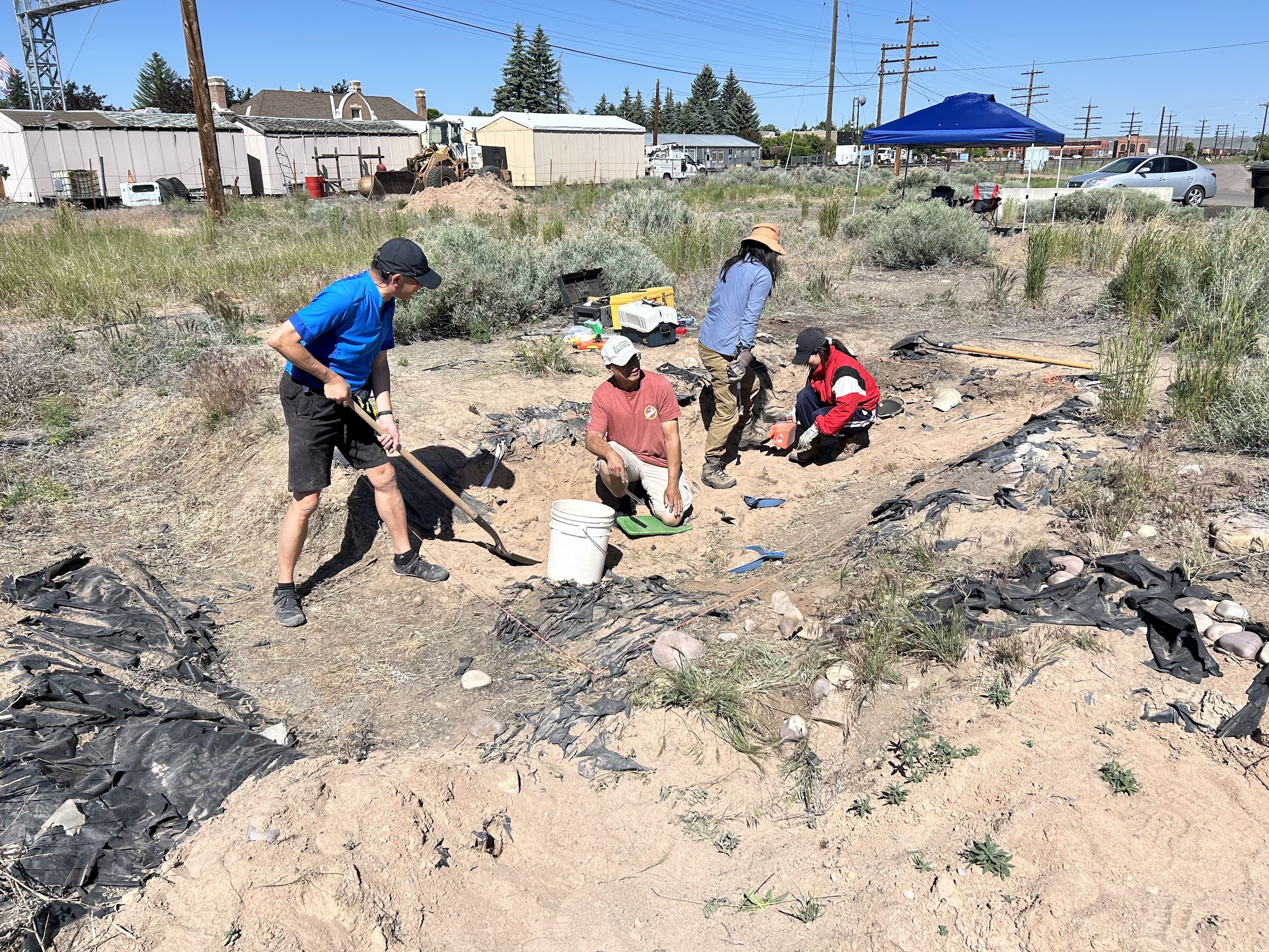
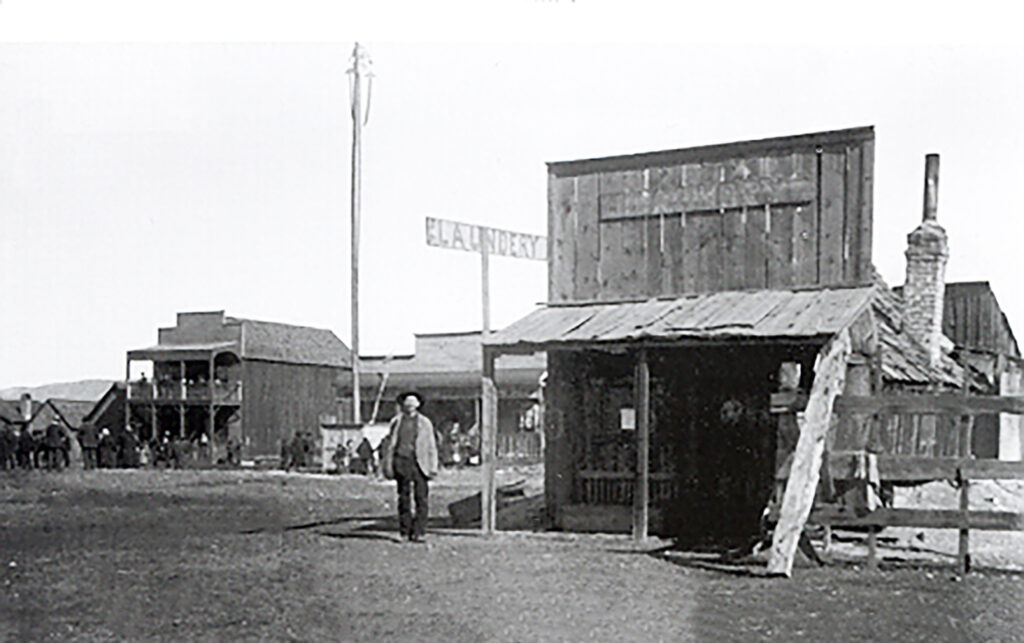
In 2024, Dr. Dudley Gardner and I had a small field crew of volunteers who assisted with excavations for two weeks. The focus was on continuing to investigate an area believed to be a laundry, as many clothing and washing-related artifacts had been found in previous field seasons, including a wringer.
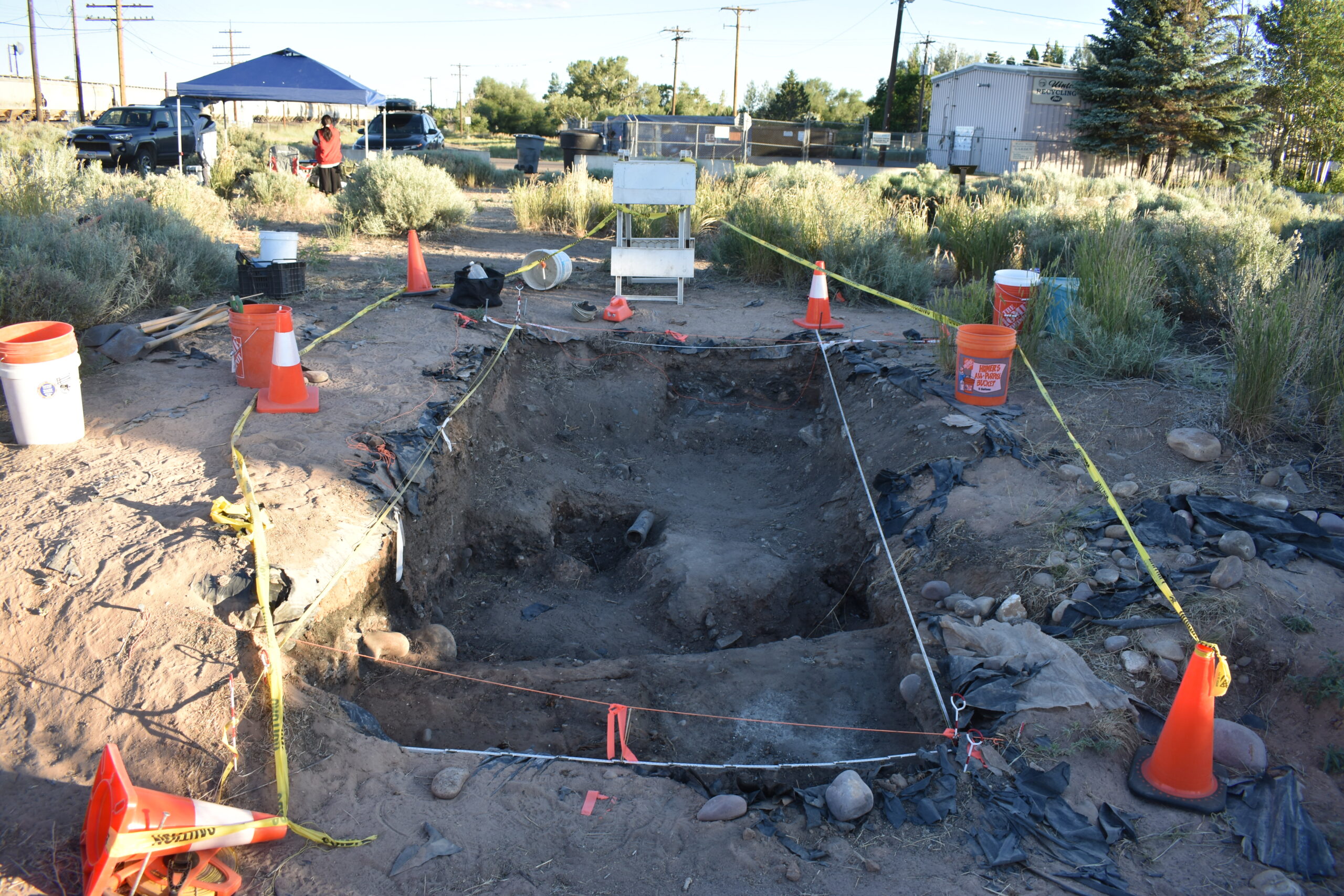
After removing sterile soil that had been used to protect the basement of a laundry that still needed to be excavated, we set up the grid with long tapes so we could carefully record everything we found. Soon after we resumed excavating the laundry, we hit a cluster of four artifacts that appeared to have been left sitting on a shelf-like area and buried over time.
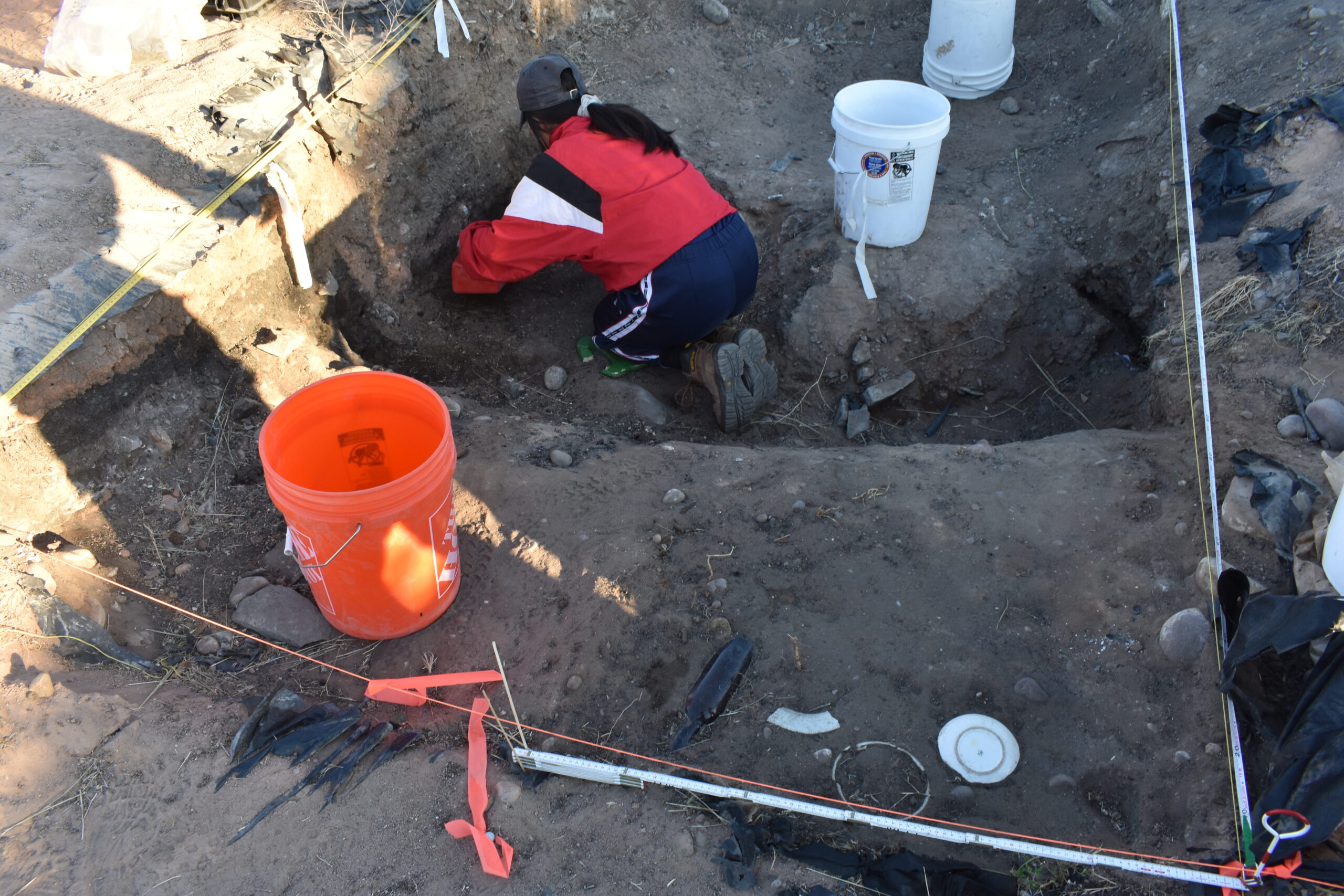
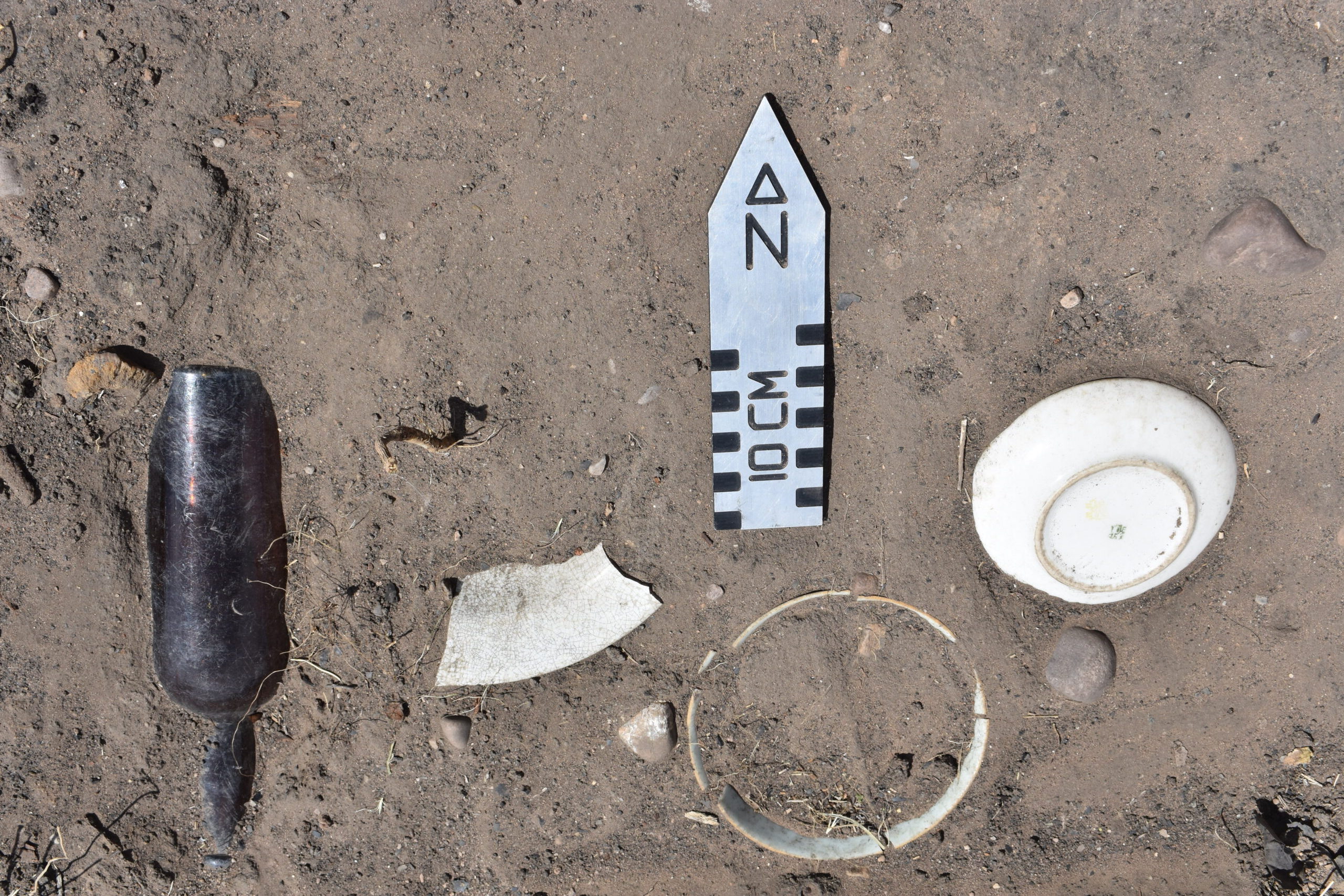
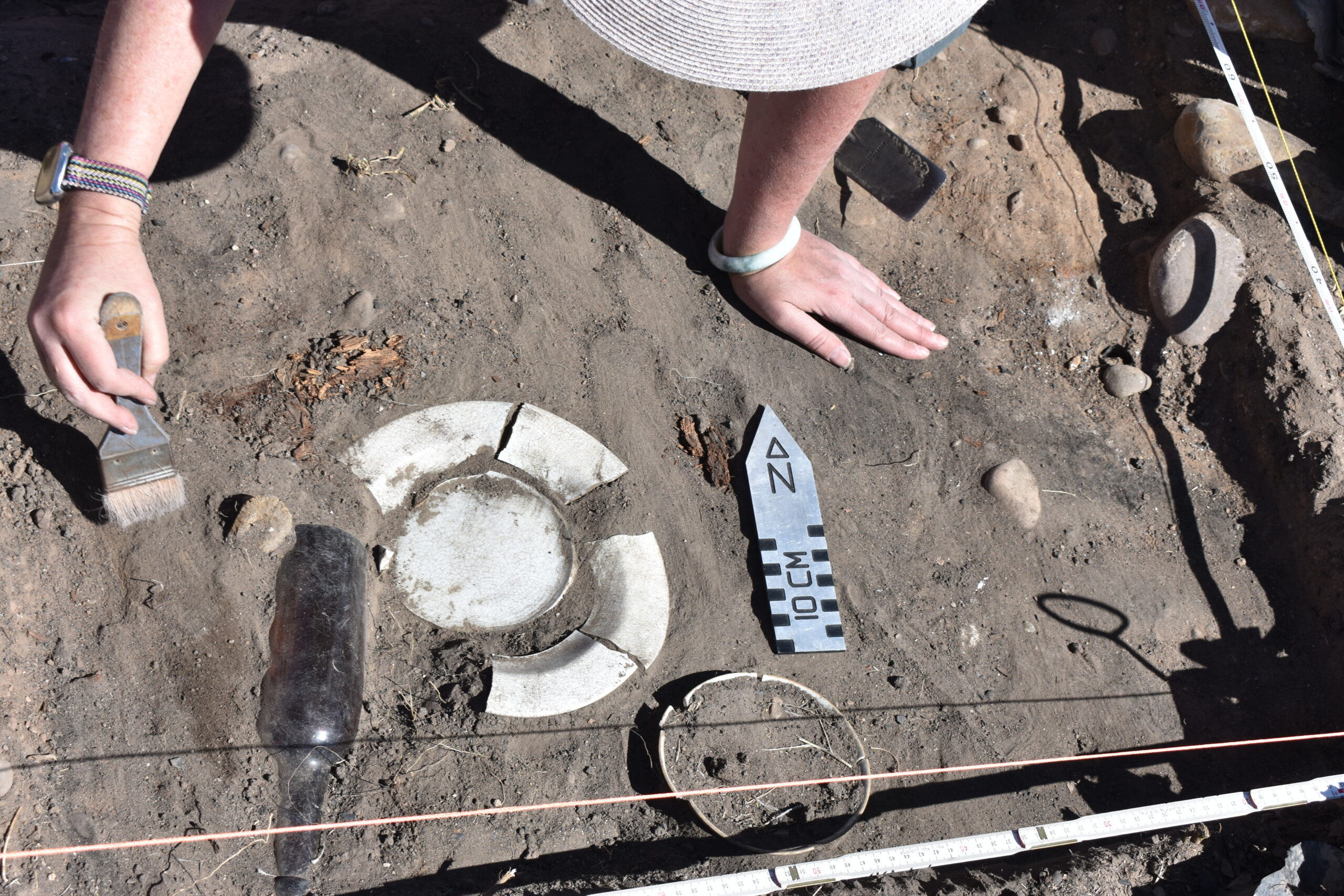
First, an intact white bowl turned upside down was uncovered (below, left). To its left, at a slightly lower depth, the outlines of a porcelain rice bowl with dirt inside appeared, along with a fragment of a whiteware plate, and an olive-green bottle lying on its side. As brushing continued (below, right), we removed the bowl and more fragments of the plate were revealed.
We carefully pedestaled each artifact (removed dirt around the sherds) so we could map them in place and gently remove them from the soil matrix instead of yanking them like a loose tooth. After removal, we carefully examined each artifact for any designs, logos, and words, and found maker’s marks on the base of the two Euroamerican tablewares. This was exciting, because marker’s marks can often be dated to a specific period of time, which can help us date the stratigraphic layer in this laundry area.
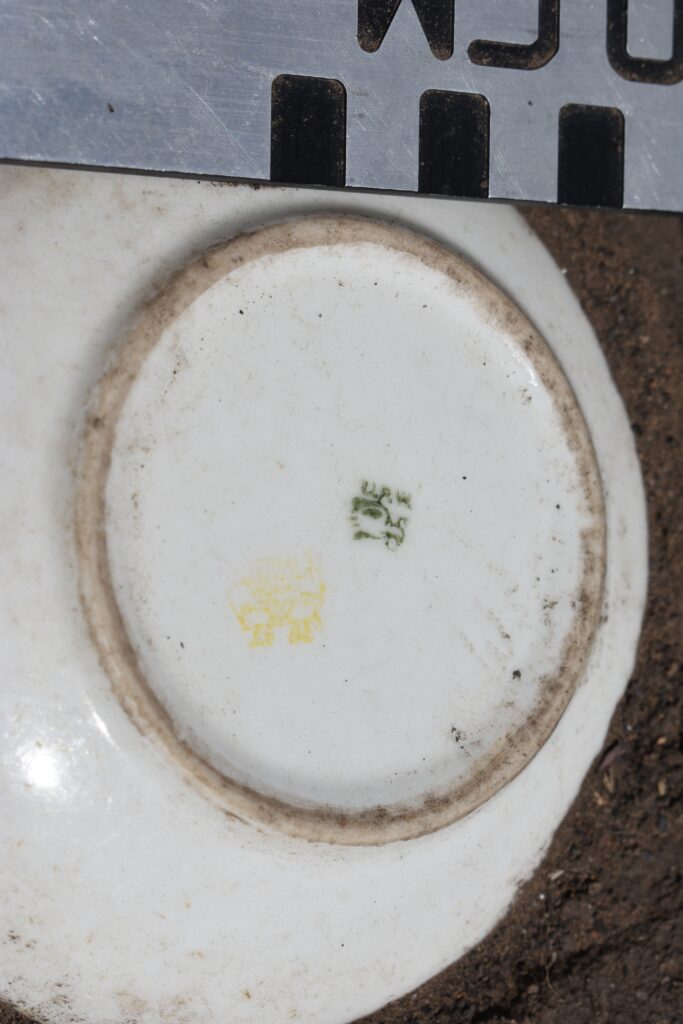
The bowl’s base had two marks: one green and one yellow. The green mark in the center of the base reads “U.P.W.” and underneath is a profile of an eagle head with a ‘S’ in its beak. On the bottom left, in yellow, you can make out these words within the outline of an urn-shaped banner:
UNION
PORCELAIN
WORKS
GREENPOINT
N.Y.
Illegible numbers are written below the banner. Not pictured is an interior view of the bowl which has the words “Pacific Hotel Co.” in red cursive, which matches an archaeologically recovered plate fragment on display at the Uinta County Museum’s reconstructed Chinese temple (referred to as a Joss House in the 19th century by non-Chinese).
The manufacturer of the bowl was Union Porcelain Works (U.P.W.) and we know that the earliest possible year that the bowl was made is 1877 because the company applied for a patent for the “eagle head with ‘S’ in its beak” logo that year. The U.P.W. pottery was located in Greenpoint, Brooklyn, N.Y. and closed in 1922, which means that the bowl was manufactured in the U.S. some time between 1877 and 1922 (Lehner 1988).
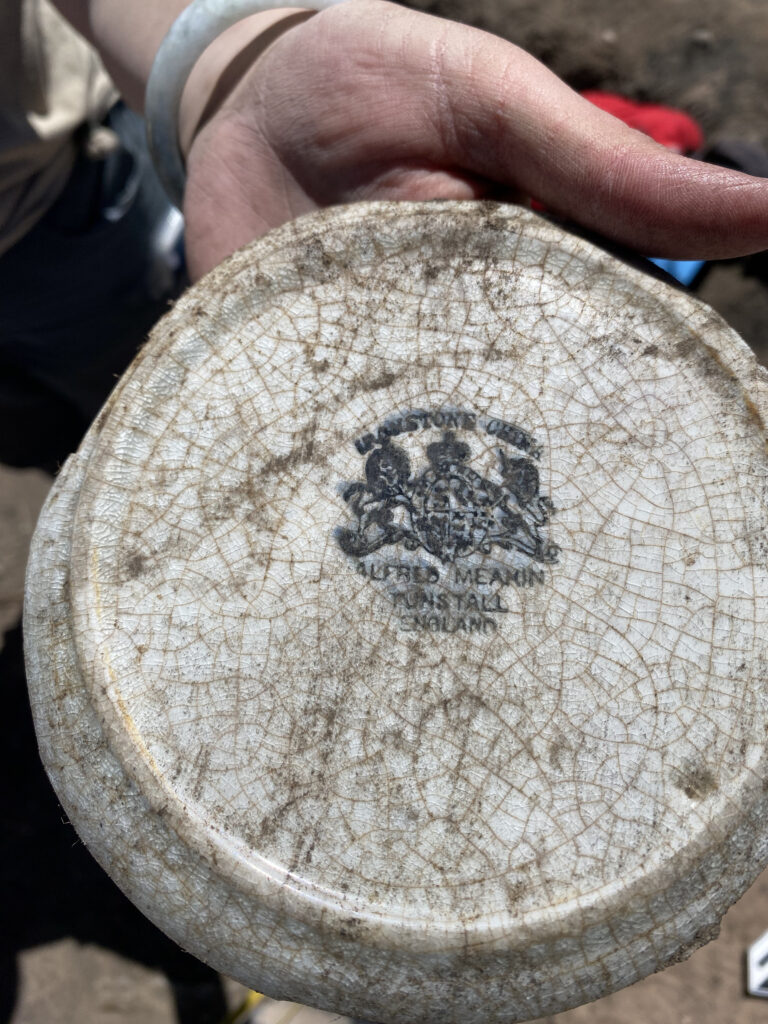
The maker’s mark on the whiteware plate provides a much tighter date range. The mark has “IRONSTONE CHINA” written above a logo of the Royal British Coat of Arms. Below the logo are the words:
ALFRED MEAKIN
TUNSTALL
ENGLAND
Student researcher Julia Ghorai noted in a previous post that Alfred Meakin was a royal pottery that was allowed to use the Royal British Coat of Arms, but it was also common for American potteries to imitate this logo. According to the website, ThePotteries.org, the Alfred Meakin maker’s mark from the Evanston Chinatown dates to 1891-1897, as the word “ENGLAND” was not added to marks until 1891, and it does not contain the letters “LTD,” which were added to Alfred Meakin marks in 1897.
Historic photo of the Evanston Chinatown laundery (sic) that was excavated.
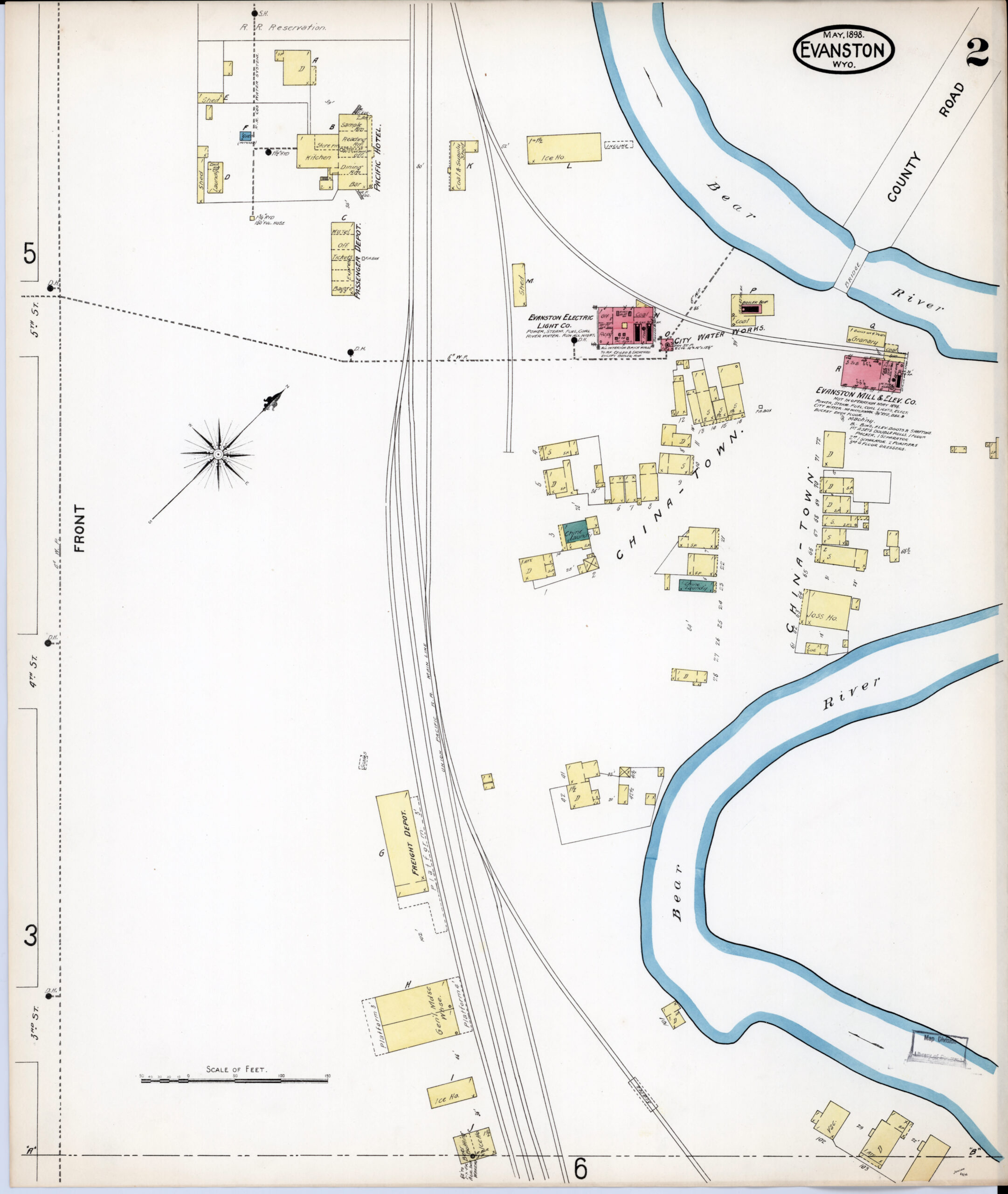
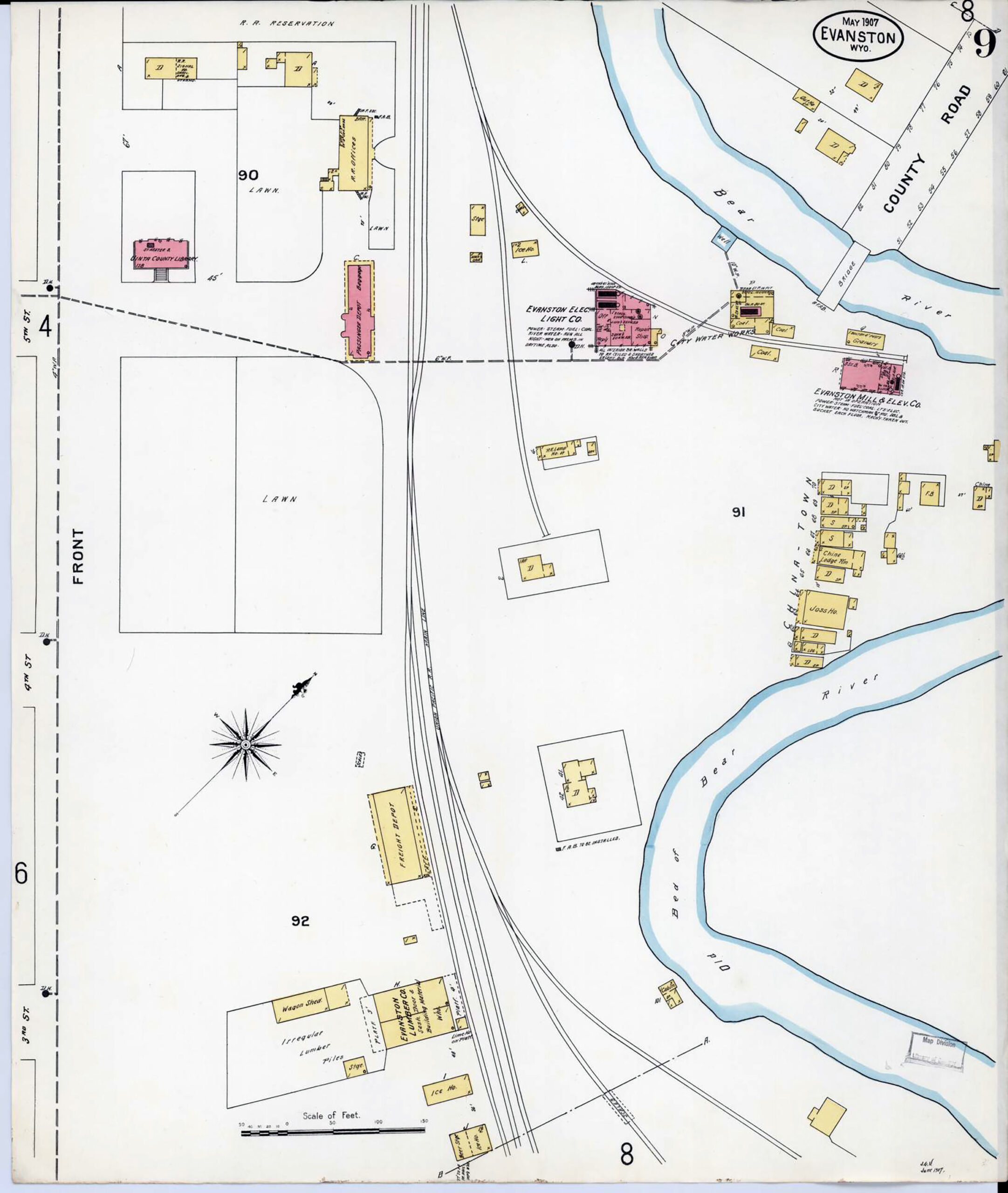
The plate gives us a terminus post quem (TPQ) of 1891 for this archaeological stratum, which means that this is the earliest possible date that these items came to be buried together. The terminus ante quem (TAQ), the latest possible date, for this stratum is 1907. The TAQ is based on a Sanborn fire insurance map from 1907, which shows the destruction of the western part of Chinatown where we were excavating the laundry. Sanborn fire insurance maps were not updated yearly, but buildings can be seen on the eastern and western part of Chinatown on an 1898 map, including two buildings labeled “Chine. laundry” and colored in blue. When compared to the 1907 map, most of the Chinatown buildings on the western side, including both laundries, are missing. The squarer of the two laundries is likely what we excavated. Dating other artifacts associated with the artifact cluster could change the TPQ, while any new information about the history of the sale and destruction of specific parts of Chinatown could change the TAQ.
Use the slider to compare the buildings that stood in the Evanston Chinatown in 1898 (left map) vs. 1907 (right map). The Chinatown is adjacent to the Bear River.
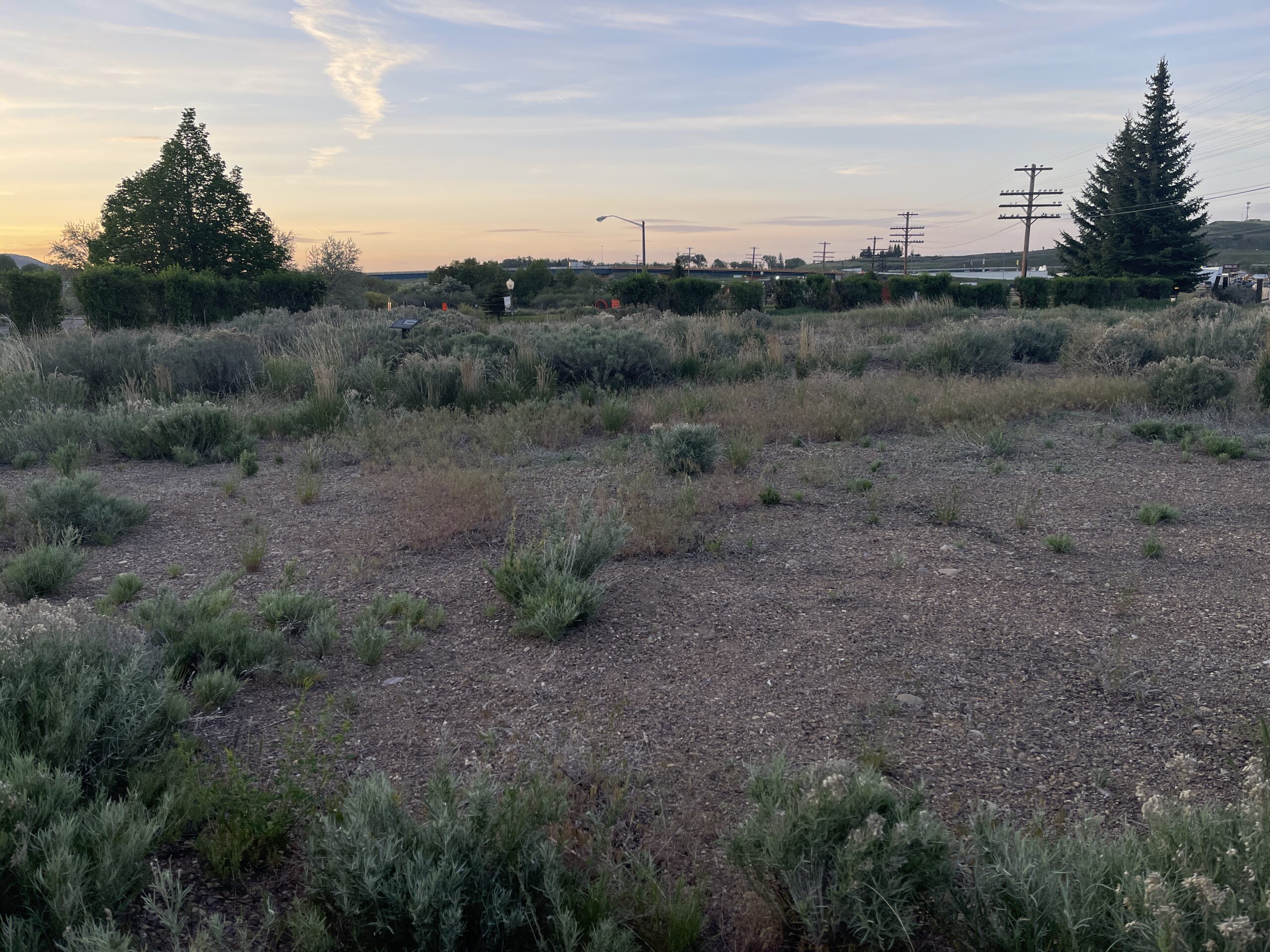
Our method for determining the date range of the stratum is called relative dating, and is only possible because the cluster of artifacts were found in situ — undisturbed after burial — until the archaeological team came in to excavate it. Dr. Gardner has protected the Evanston Chinatown site by xeriscaping it to match the Great Basin environment. While there is a sign that relays the history and significance of the Chinatown, the archaeological site remains nondescript. Since 1994, Dr. Gardner has also led a public archaeology program where generations of local residents, including schoolchildren, have been able to participate in excavations. Intentional landscaping and public outreach efforts have both helped preserve the Evanston Chinatown archaeological site for future research and interpretation.
References
Gardner, A. Dudley, Martin Lammers, Laura Pasacreta, and Seth Panter. 2004. “Women and Children in the Evanston Chinatown.” Wyoming Archaeologist 48 (2):20–30.
Lehner, Lois. 1988. Lehner’s Encyclopedia of U.S. Marks on Pottery, Porcelain & Clay. Collector Books.
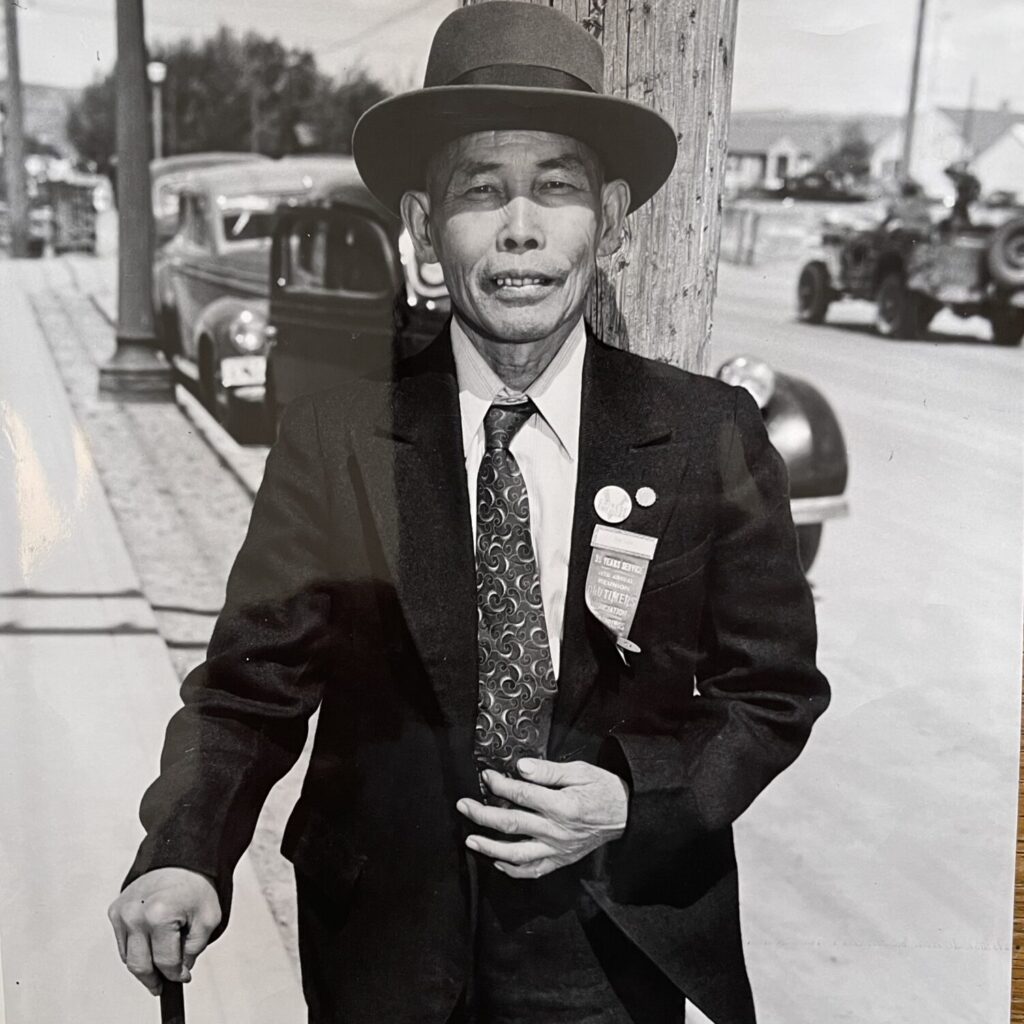
Hi everyone! Avajane here — it’s been a moment since I’ve shared a research update on the blog! In early January, after completing a training in oral history interviewing, I received funding from the Grinnell College Anthropology Department to travel to New York City to continue my research on Chinese immigrants who lived in Rock Springs. This past summer, for my mentored advanced project, I created an ArcGIS StoryMap about the life and legacy of Leo Yee Litt, a coal miner who lived in the post-massacre Rock Springs Chinatown. My research was pieced together through Leo Yee Litt’s descendants in oral histories, his immigration and census records, archival and family photographs, and newspaper articles.
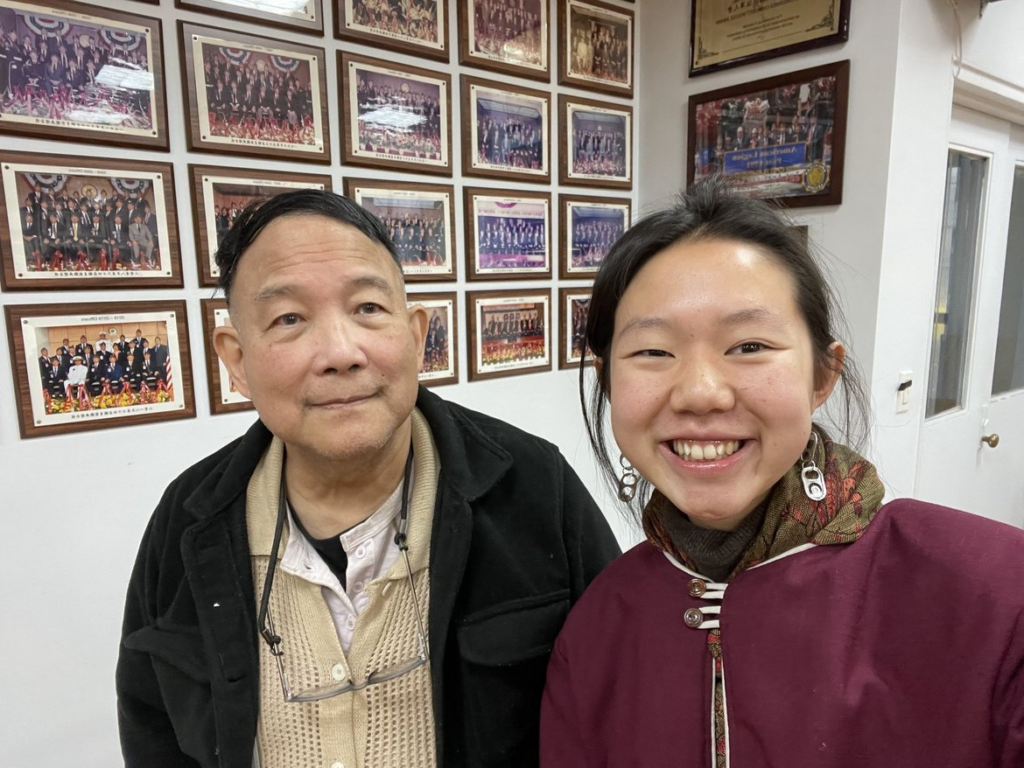
The purpose of my visit to NYC was to interview one of his grandsons, Arvin Chin, who might share stories that may have slipped through the cracks of the written record regarding two of Yee Litt’s children — Mabel and George — who moved from Rock Springs to New York City, and the military service of the Yee Litt brothers. Arvin himself is an Air Force veteran.
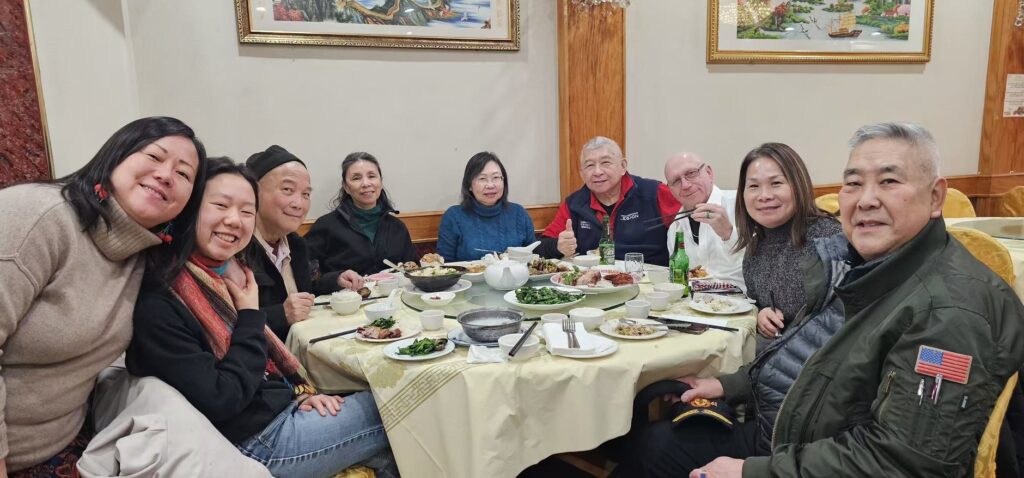
Accompanied by my mom, I arrived in NYC on January 4th, where I would get to know Arvin over the next few days. Shortly after settling in, we were invited to join him and his friends from the American Legion Lt. Kimlau Chinese Memorial Post, to share a Toisanese family-style dinner at the Sun Hong Wong restaurant in Chinatown. The members of the American Legion were curious about my research and asked about the Rock Springs Chinatown; in turn, they shared their Chinese families’ similar early experiences in America. The dinner was a warm welcome to New York City.
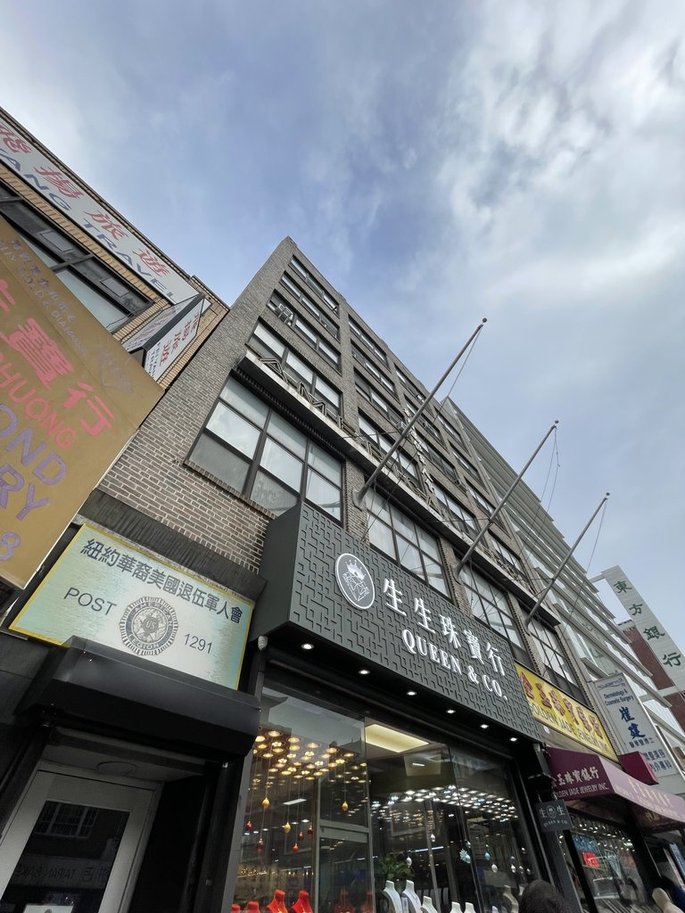
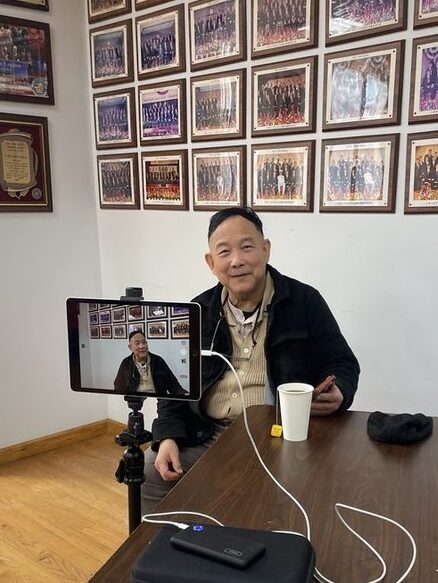
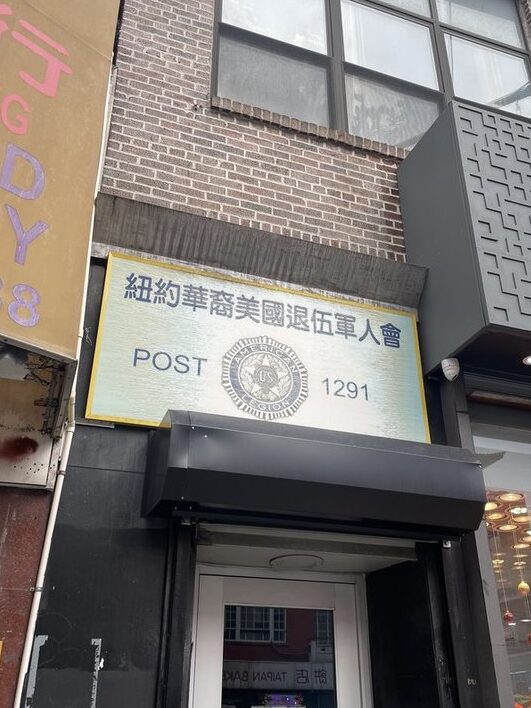
My interview with Arvin took place the following day at the American Legion Post 1291 building on Canal Street. Over the span of nearly four hours, he dove deep into the lives of Leo Yee Litt’s seven children, which included his mother, Mabel Chin. I learned that Arvin’s most memorable interaction with his maternal grandfather was as a four year old during one of his mother’s occasional trips to California to visit family who had moved to the Bay Area by 1951. He likely met his maternal grandparents in Rock Springs in 1950 or 1951 as there is a photo of them holding him and his twin as babies/toddlers. He also sometimes accompanied his mother to her high school reunions in Rock Springs. The Yee Litts clearly maintained their closeness with each other despite their slow trickle out of Rock Springs into the east and west coasts over the decades.
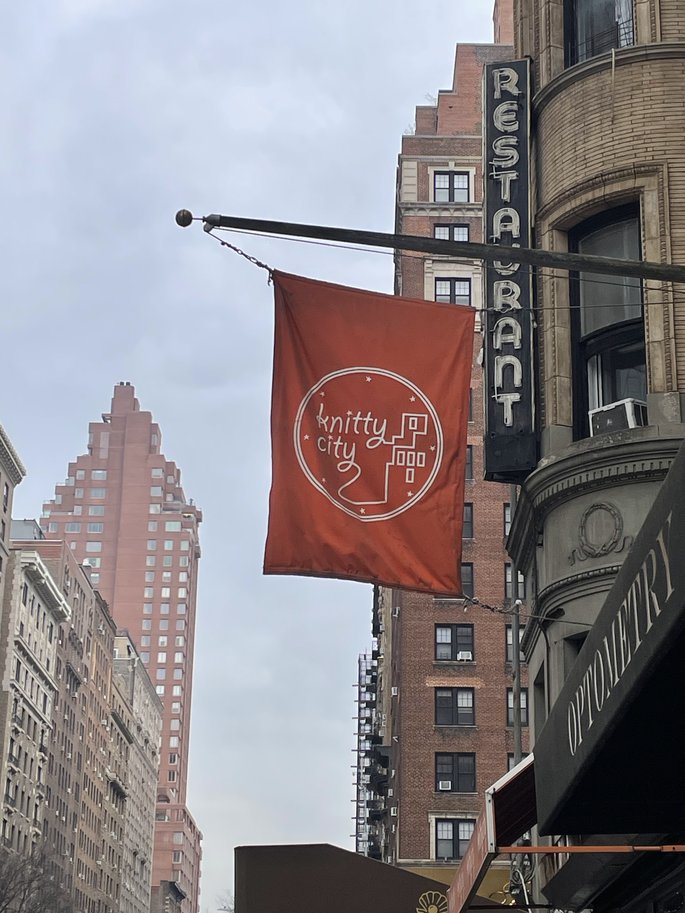
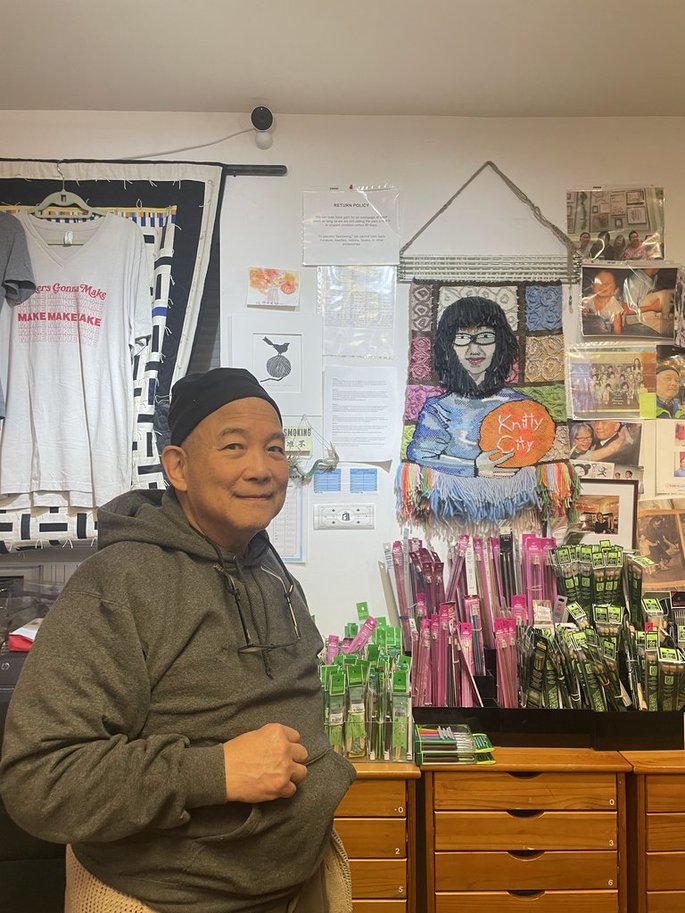
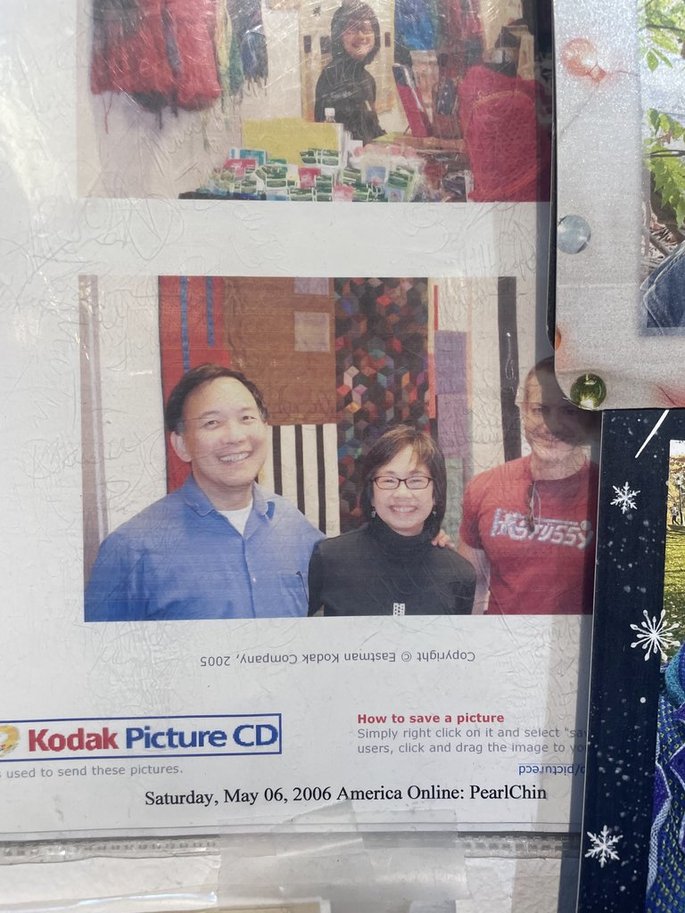
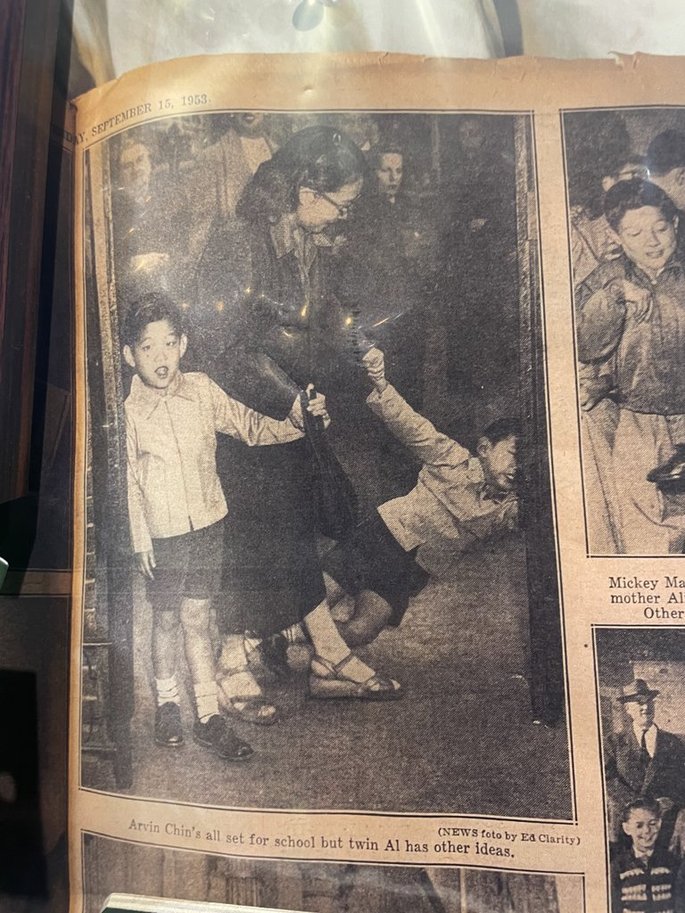
The following day, I visited Arvin in the Upper West Side at the yarn store he owns, Knitty City. He opened the store in 2006 with his late wife, Pearl Chin. As Arvin showed me around the store, he slipped in anecdotes about its beginnings and how Pearl had loved the idea of owning a mom-and-pop shop together. In the back of the store hung a tapestry in her memory, surrounded by photos of their family. There is even a newspaper clipping of Arvin and his twin, Alvin, as kids on their first day of school back in 1953. In the photo is his mother, Mabel, the second of the seven Yee Litt children.
To end this post, I would like to thank Arvin for his kindness and willingness to share his family’s story in and beyond Rock Springs. I would also like to thank Professor Ng for her guidance in approaching this oral history project and the Anthropology Department for providing the funding, which made this trip possible.
Edited for clarity on when and where Arvin visited his maternal grandparents.